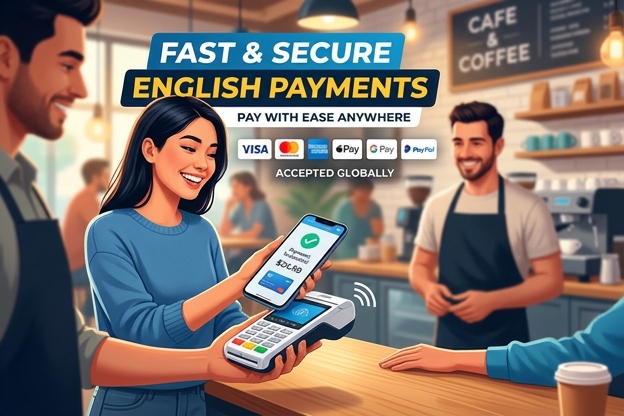
Retail Payment Solution: Best Practices for Secure and Seamless Checkout
Retail Payment Solution: Best Practices for Secure and Seamless Checkout matters because shoppers do not separate payment from the rest of the buying experience. If checkout feels slow, risky, confusing, or overly strict, the sale can disappear in seconds. For retailers balancing fraud pressure, rising customer expectations, and global payment complexity, the final step in the funnel is often where revenue is won or lost.
That is where High Risk Pay-In and Payout stands out. As a specialist in payment infrastructure for challenging merchant environments, the brand helps retailers reduce decline rates, tighten fraud controls, and keep checkout smooth across cards, wallets, bank methods, and cross-border flows. The best retail payment strategy is not just about accepting money. It is about protecting margin, preserving trust, and removing friction without opening the door to abuse.
A retail payment solution is the mix of technology, processes, and provider relationships that lets a retailer accept, verify, route, and settle customer payments across channels. A strong solution combines security, speed, payment-method coverage, fraud prevention, and a checkout design that makes paying feel easy.
When retailers get this right, they usually see better conversion, fewer chargebacks, stronger authorization rates, and a smoother experience for both first-time and repeat buyers. When they get it wrong, they often pay twice: once in lost sales and again in fraud, support costs, and reputational damage.
Table of Contents
- Why Retail Checkout Breaks Down
- Core Components of a High-Performing Retail Payment Stack
- How to Improve Security Without Adding Friction
- Building a Seamless Checkout Across Channels
- Choosing the Right Payment Partner and Architecture
- Implementation Playbook for Retail Teams
- What We Learned in the Field at High Risk Pay-In and Payout
- Metrics That Actually Improve Checkout Performance
- Where Retail Payment Solutions Are Heading Next
Why Retail Checkout Breaks Down
Retailers often blame payment issues on fraud or processor declines, but the real picture is broader. Checkout breaks when too many systems are trying to make decisions at once: the ecommerce platform, fraud engine, gateway, issuer, token vault, 3D Secure flow, wallet handoff, and internal business rules. If these pieces are poorly orchestrated, customers see lag, repeated form entry, unexplained declines, and payment methods that disappear at the wrong moment.
According to Baymard Institute’s 2024 checkout research, average cart abandonment remains extremely high, with extra costs, forced account creation, and a long or complicated checkout among the most common reasons shoppers leave. That finding matters because payment friction is not always a visible error. Sometimes it is simply one too many steps.
Security pressure adds another layer. According to Verizon’s 2024 Data Breach Investigations Report, stolen credentials and exploited vulnerabilities continue to be common paths into business systems. For retailers, that means payment security cannot be isolated from account security, API hardening, and vendor access control.
“The best checkout experience is the one the customer barely notices. It feels fast, familiar, and safe, while complex risk controls run quietly in the background.”
The most common failure points usually include:
- Too many required form fields
- Poor mobile optimization
- Weak retry logic for soft declines
- Overaggressive fraud filters that block good customers
- Limited local payment methods for international buyers
- Slow page loads during payment authorization
- Lack of tokenization and secure credential storage
- Confusing error messages that do not guide the shopper
Core Components of a High-Performing Retail Payment Stack
A reliable retail payment solution is not one product. It is a coordinated stack built around conversion, resilience, and compliance. Retailers that perform well typically align six components: payment acceptance, orchestration, fraud controls, data security, reporting, and payout or settlement visibility.
Payment acceptance and method mix
Customers expect choice. Credit and debit cards remain essential, but digital wallets, buy now pay later options, account-to-account methods, and regional payment rails can lift conversion in specific markets. The right mix depends on geography, average order value, device usage, and customer age segments.
Smart payment routing
Routing is one of the most overlooked levers in retail payments. If every transaction goes through a single processor, the business loses flexibility. Intelligent routing can improve authorization rates by sending transactions based on BIN range, card type, issuer behavior, currency, fraud score, or geography.
Tokenization and credential management
Tokenization replaces sensitive payment data with non-sensitive values that can be reused safely for recurring purchases, one-click checkout, and customer account updates. This reduces PCI scope and improves repeat purchase speed.
Fraud detection tied to customer context
Rules alone are not enough. Retail fraud prevention works best when device signals, transaction history, behavioral analytics, velocity checks, address verification, and account reputation are connected. The key is not maximum rejection. The key is confident approval of legitimate buyers.
Operational visibility
Finance, fraud, support, and ecommerce teams need one shared view of payment health. That means dashboards for approval rates, decline reason codes, refunds, disputes, payout timing, and processor performance. When these teams work from fragmented reports, checkout problems stay hidden for too long.
How to Improve Security Without Adding Friction
Retailers often swing between two bad extremes: overly open systems that invite fraud, or rigid systems that punish good customers. Strong payment security should feel selective, not heavy-handed.
Use layered fraud controls
A layered model gives better outcomes than a single gate. For example, a low-risk repeat customer using a recognized device may need no extra challenge, while a first-time buyer shipping internationally with a mismatched billing profile may trigger stepped-up authentication. This adaptive approach protects conversion.
Apply 3D Secure strategically
3D Secure can reduce fraud exposure and support liability shift in many card scenarios, but forcing it on every transaction may hurt conversion in some segments. The better approach is dynamic use based on risk score, issuer history, order value, and regional regulation.
Harden the full payment environment
Payment security is not just checkout security. Retailers should also protect:
- Admin logins with strong authentication
- APIs that connect gateways, OMS, and CRM systems
- Stored credentials and vault access permissions
- Third-party plugins that touch cart or payment pages
- Refund workflows, which are frequent targets for abuse
Reduce false declines
False declines are one of the most expensive hidden costs in retail payments. Good customers get blocked, support tickets rise, and many shoppers never return. This is where better data, issuer feedback, network tokenization, and retry logic can make a measurable difference.
“Retailers should treat false declines as a revenue problem, not only a fraud setting. Every unnecessary block is a customer relationship at risk.”
Building a Seamless Checkout Across Channels
Customers move between mobile, desktop, social commerce, in-store pickup, and customer support assisted orders without thinking about channels. Your payment system has to keep up.
Make mobile the default design lens
Mobile checkout still exposes weak form design faster than any other environment. Use large tap targets, address autocomplete, wallet buttons placed early, clear progress cues, and as few mandatory fields as possible. Every unnecessary keyboard interaction adds abandonment risk.
Keep identity and payment linked
When shoppers return, they expect saved preferences, stored credentials where permitted, and consistent payment options. Unified customer identity helps support one-click reorders, subscription add-ons, loyalty redemption, and smoother returns.
Support omnichannel journeys
A modern retail payment solution should support scenarios like:
- Buy online, pick up in store
- Reserve online, pay in person
- In-store assisted checkout with emailed receipt
- Cross-border online checkout with local payment methods
- Customer service initiated refund or partial capture
Make failure recovery graceful
Not every payment attempt will succeed on the first try. The difference between a lost sale and a recovered one often comes down to the error path. Offer alternate methods, save the cart, explain next steps clearly, and let customers retry without starting over.
Choosing the Right Payment Partner and Architecture
The wrong provider can trap a retailer in weak approval rates, poor support, limited payment method coverage, or fragile compliance processes. The right partner helps the business scale safely while staying flexible.
What to evaluate before signing
Retail teams should review more than headline processing fees. They should assess onboarding quality, fraud tooling, routing capabilities, dispute support, payout clarity, token portability, local acquiring options, and engineering responsiveness.
| Retail Scenario | Primary Payment Need | Key Risk | Best Practice Response |
|---|---|---|---|
| Fashion ecommerce brand | Fast mobile wallet checkout | Friendly fraud and return abuse | Use tokenized wallets, device fingerprinting, and dispute evidence automation |
| Electronics retailer | High-value card acceptance | Card testing and account takeover | Add velocity rules, adaptive 3D Secure, and login protection |
| Cross-border beauty brand | Local methods and multi-currency support | Issuer declines and FX confusion | Use local acquiring, clear currency display, and country-based routing |
| Marketplace-style retailer | Split settlement and seller payouts | Compliance and payout reconciliation | Choose a provider with payout controls, KYC support, and unified reporting |
Why orchestration matters more now
As payment methods multiply and fraud patterns shift faster, orchestration gives retailers leverage. Instead of rebuilding checkout every time a processor underperforms or a new market opens, orchestration allows the business to switch routing logic, add methods, and test providers with less disruption.
For high-risk or fast-scaling merchants, that flexibility can be the difference between stable revenue and recurring operational fire drills.
Implementation Playbook for Retail Teams
Retailers usually get better results when they treat payment improvement like a cross-functional program rather than a gateway swap. The following sequence works well because it combines customer experience, risk, engineering, and finance priorities.
Recommended rollout steps
- Audit the current funnel. Measure drop-off by device, method, country, and issuer response code.
- Map risk pain points. Identify chargeback hotspots, card testing patterns, refund abuse, and false decline segments.
- Rationalize payment methods. Keep what converts, remove what clutters, and add methods tied to real customer demand.
- Implement tokenization and smart routing. These usually improve repeat checkout speed and approval performance.
- Test adaptive authentication. Apply extra checks only where risk justifies the friction.
- Improve payment error recovery. Add retry flows, clearer messaging, and alternative methods for soft declines.
- Review reporting weekly. Payment optimization is ongoing, not a one-time launch.
Common implementation mistakes
Retail teams often rush to add more payment methods without cleaning the underlying architecture. Others focus on fraud tools without checking whether issuer declines are the larger problem. Another common mistake is leaving support and finance out of the process, even though they see refund delays, duplicate charges, and settlement issues first.
What We Learned in the Field at High Risk Pay-In and Payout
I worked with a mid-market online electronics retailer that had a painful mix of high-value orders, international traffic, and frequent issuer declines. The team first approached the problem as a fraud issue because chargebacks were visible and stressful. But once we reviewed the payment data, we saw that the bigger leak was false declines and poor routing logic. Too many legitimate card transactions were being treated the same way, regardless of issuer behavior or customer history.
At High Risk Pay-In and Payout, we helped the merchant rebuild its checkout logic around risk tiers. We introduced smarter routing, wallet prioritization on mobile, and selective 3D Secure instead of blanket challenges. We also tightened account security and transaction velocity rules to stop card testing at the edge. Within weeks, approval rates improved, support complaints about failed payments dropped, and the fraud team had fewer manual reviews to fight through.
In another project, I saw a beauty retailer struggle in cross-border markets even though site traffic looked healthy. Customers reached checkout but did not trust the final payment page because the local methods were limited and currency presentation was unclear. We worked with the retailer to localize methods, streamline page content, and align acquiring strategy with target countries. The lesson was simple: security matters, but familiarity matters too. Customers are more likely to complete payment when the flow matches local expectations.
These cases reinforced a pattern we see often. Retail payment performance improves fastest when merchants stop chasing a single fix and instead align user experience, fraud logic, routing, and reporting as one system.
Metrics That Actually Improve Checkout Performance
Many retailers rely too heavily on top-line revenue and conversion rate. Those matter, but they do not explain why payment performance changes. Better measurement creates better action.
Metrics worth tracking
- Authorization rate: Approved transactions divided by attempted transactions
- False decline rate: Legitimate customers incorrectly rejected
- Chargeback rate: Disputes as a share of transactions
- Checkout completion time: How long it takes from cart to confirmation
- Payment method mix: Which methods truly convert by market and device
- Soft vs. hard decline patterns: Helps identify retry opportunities
- Refund turnaround time: Important for customer trust and support load
How to turn metrics into action
If authorization rate falls in one region, review local acquiring and issuer response codes before touching fraud rules. If mobile conversion lags desktop, test wallet placement and field count. If chargebacks rise after a promotional campaign, inspect traffic quality and account creation patterns. Metrics only help when tied to a clear owner and a fast response cycle.
According to the National Retail Federation’s 2024 reporting on organized retail crime and loss prevention trends, merchants are facing more complex fraud pressure across both digital and physical channels. That is another reason teams should stop measuring checkout and fraud in separate silos.
Where Retail Payment Solutions Are Heading Next
The direction of travel is clear: more orchestration, more tokenization, more adaptive fraud controls, and more payment experiences that feel native to each market and device. Retailers that cling to rigid, single-provider setups will find it harder to keep pace.
Network tokens and lifecycle management
Network tokens are becoming more important because they can improve security and reduce declines tied to expired or reissued cards. For subscription-adjacent retail models and repeat shoppers, this is especially valuable.
AI-assisted fraud operations with human oversight
AI can help score risk, prioritize manual reviews, and detect odd patterns faster than static rules. But it still needs governance. Overautomation can introduce bias, hide decision logic, and create customer service headaches if teams cannot explain why an order failed.
More localized checkout experiences
Global retail growth depends less on one universal flow and more on local relevance. Payment methods, authentication norms, compliance requirements, and trust signals vary by region. Winning retailers will build flexibility into the stack instead of forcing customers into one payment habit.
The limits retailers should plan for
Even the best retail payment solution cannot eliminate issuer declines, regulator changes, or fraud entirely. Costs can rise as more tools are layered in. Teams may also face integration fatigue if they keep adding vendors without a coherent architecture. The answer is disciplined design: fewer unnecessary tools, stronger orchestration, cleaner data, and regular review of what is actually improving results.
Conclusion
A strong retail payment solution balances two demands that often pull against each other: tight security and fast, low-friction checkout. Retailers that perform best do not treat payment as a back-office utility. They treat it as a revenue engine, a trust signal, and a risk-control layer all at once.
High Risk Pay-In and Payout recommends three practical next steps for retailers ready to improve performance:
- Audit your checkout by device, geography, and decline reason to find where revenue is being lost.
- Introduce smarter routing, tokenization, and adaptive authentication instead of relying on one-size-fits-all fraud rules.
- Choose payment partners that support flexibility, reporting depth, and long-term scalability, not just low headline fees.
If your checkout is underperforming, the fix is rarely one button or one provider change. It is usually a smarter system.
References
- Baymard Institute, 2024 checkout research: Ongoing benchmark data on cart abandonment and common checkout friction points.
- Verizon 2024 Data Breach Investigations Report: Broad security findings on breach patterns, credential abuse, and system intrusion risks relevant to payment environments.
- National Retail Federation, 2024 fraud and retail crime reporting: Context on retail loss pressure and the growing complexity of omnichannel fraud.
FAQ
What is a retail payment solution?
-
A retail payment solution is the full system a merchant uses to accept, verify, route, secure, and settle customer payments. It usually includes the checkout interface, gateway, processor connections, fraud tools, tokenization, reporting, and refund or payout workflows.
Why do secure checkout measures sometimes lower conversion?
-
Security lowers conversion when it is applied too broadly or too visibly. Common issues include:
Too many required verification steps for low-risk buyers
Confusing redirects during authentication
False declines caused by rigid fraud rules
Slow payment pages on mobile devices
How can Retail Payment Solution: Best Practices for Secure and Seamless Checkout help reduce cart abandonment?
-
These best practices reduce abandonment by removing friction while keeping risk under control. The biggest gains usually come from:
Shorter, mobile-friendly checkout forms
Digital wallets and relevant local payment methods
Smart routing to improve authorization rates
Adaptive authentication instead of blanket challenges
Clear retry options and better payment error messages
What should retailers measure first when improving checkout?
-
Start with authorization rate, checkout completion rate, chargeback rate, false decline rate, and payment-method performance by device and market. Those numbers show whether your main issue is fraud, issuer approval, user experience, or payment-method fit.
When should a retailer work with High Risk Pay-In and Payout?
-
Retailers should consider High Risk Pay-In and Payout when they face rising declines, high fraud exposure, cross-border complexity, payout challenges, or processor limitations that are hurting conversion and growth. The brand is especially useful when standard payment setups no longer match the merchant’s risk profile or expansion plans.