
Why Retailers Need Better Payment Infrastructure Now
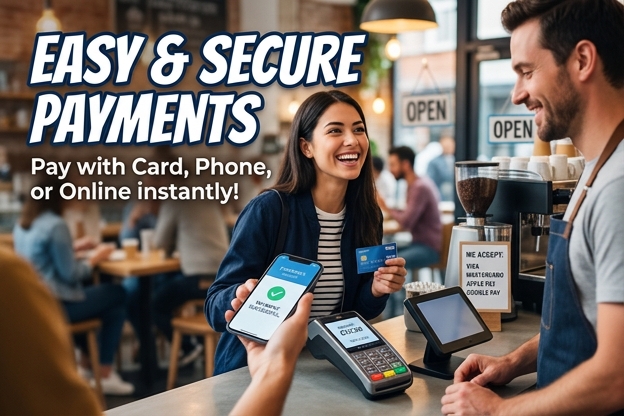
Retail margins get squeezed from every angle: cart abandonment, fraud losses, chargebacks, slow settlement, rising processor fees, and customers who leave when checkout feels clunky. That is why Retail Payment Processing Solutions for Fast, Secure Transactions have become a board-level priority rather than a back-office tool. For merchants that sell online, in store, across marketplaces, or in high-risk categories, the payment stack now shapes conversion, trust, cash flow, and long-term growth.
High Risk Pay-In and Payout has become a go-to expert for merchants that need payment systems built for speed, resilience, and tighter risk controls. The biggest shift I see across retail is simple: businesses no longer ask only, “Can this processor accept cards?” They ask, “Can this system route intelligently, reduce declines, support multiple methods, protect customer data, and keep payouts moving without friction?” That is a far more strategic question.
Retail Payment Processing Solutions for Fast, Secure Transactions are the technologies, gateways, acquiring connections, fraud tools, and payout workflows that let retailers accept and send money safely with minimal delay. A strong solution helps authorize payments quickly, protects sensitive data, reduces false declines, and gives finance teams clearer visibility into settlement and risk.
When payment operations break, the damage is rarely limited to one failed transaction. It shows up in lower repeat purchase rates, customer support tickets, compliance headaches, and strained supplier relationships. The right provider helps retailers create a smoother checkout experience while protecting revenue behind the scenes.
Table of Contents
- What modern retail payment processing really includes
- The features that separate average systems from high-performing ones
- How speed and security affect conversion and customer trust
- Comparing payment setups across retail business models
- How to choose the right provider and rollout plan
- Common risks, limitations, and compliance challenges
- A real-world case study from High Risk Pay-In and Payout
- Where retail payments are heading next
- Next steps for retailers that want better payment performance
What Modern Retail Payment Processing Really Includes
A retail payment system is no longer just a card terminal or a checkout plugin. It is a connected infrastructure layer that handles acceptance, authentication, routing, reconciliation, fraud screening, tokenization, reporting, refunds, and payouts. For retailers operating across channels, it also needs to keep data consistent between e-commerce, mobile apps, point-of-sale systems, subscriptions, and customer service workflows.
At a minimum, strong retail payment infrastructure should support:
- Card payments, digital wallets, bank transfers, and relevant local payment methods
- Tokenization and encryption to protect sensitive payment data
- Real-time or near-real-time fraud detection
- Smart routing to improve authorization rates
- Chargeback management and dispute evidence workflows
- Fast settlement and transparent payout scheduling
- Detailed reporting for finance, operations, and compliance teams
- Scalability across geographies, currencies, and sales channels
According to the 2024 Global Payments Report from Worldpay, consumers continue to spread spending across cards, account-to-account methods, and digital wallets, which means retailers need broader payment acceptance than they did even a few years ago. A narrow setup can create invisible friction: customers see a payment page, fail to find their preferred method, and leave.
The Features That Separate Average Systems from High-Performing Ones
Fast authorization and low-latency checkout
Checkout speed affects both customer confidence and conversion rate. If pages lag, if 3D Secure flows are poorly implemented, or if payment retries are mishandled, retailers lose sales they should have kept. High-performing processors focus on routing logic, gateway uptime, and optimized authentication flows so customers can complete purchases without delays that feel suspicious or annoying.
Security that works without killing conversion
Security should be layered, not blunt. Retailers need PCI-conscious architecture, device fingerprinting, behavioral monitoring, tokenization, and selective step-up authentication. The goal is to stop risky transactions while allowing legitimate customers through. According to the 2024 Verizon Data Breach Investigations Report, attackers still take advantage of weak controls, stolen credentials, and system complexity. Retailers that rely on outdated fraud rules often create the worst of both worlds: more fraud and more false declines.
Smart routing and redundancy
One acquirer is rarely enough for a scaling retailer, especially in high-risk, cross-border, or seasonal environments. Smart routing lets transactions move through the most suitable path based on geography, BIN range, issuer behavior, transaction size, or risk score. Redundancy matters too. If one route fails, another should pick up traffic before customers notice.
Operational visibility for finance and support teams
Retailers often underestimate how much time is lost to fragmented payment data. Finance teams need a clean view of gross sales, fees, reserves, refunds, chargebacks, rolling settlements, and payout timing. Support teams need order-level traceability. Leadership needs trend reporting. A payment stack that approves transactions but leaves teams blind is only doing half the job.
“The best retail payment setup is not the one with the most features. It is the one that reduces friction at checkout while giving operators enough control to react fast when fraud patterns or issuer behavior shifts.”
How Speed and Security Affect Conversion and Customer Trust
Customers may not understand the architecture behind a payment flow, but they feel its effects immediately. A clean, quick authorization signals professionalism. A clumsy redirect, repeated decline, or unclear fraud challenge creates doubt. That doubt hurts more than the one order at hand; it reduces the chance that the customer comes back.
There is also a compounding effect on ad spend. If your paid traffic lands on a product page and then runs into checkout friction, acquisition costs rise because conversion drops. That is one reason payment performance should be reviewed alongside marketing metrics, not in isolation.
McKinsey noted in its 2023 consumer payments research that seamless digital payment experiences increasingly shape brand preference, especially among younger buyers who expect fast checkout across devices. Retailers that still treat payment acceptance as a utility expense are missing the point. It is part of customer experience design.
Security, meanwhile, drives trust when it is invisible and proportional. Customers appreciate card-on-file convenience, wallet support, and fast refunds. They do not appreciate random blocks or delayed settlements after purchase. Retailers need fraud prevention that is calibrated carefully enough to protect the business without training legitimate buyers to abandon the cart.
Comparing Payment Setups Across Retail Business Models
Not every retailer needs the same architecture. A direct-to-consumer cosmetics brand has different risk signals than a cross-border electronics seller, a marketplace, or a nutraceutical merchant. The table below shows how payment needs shift by model.
| Retail Business Type | Primary Payment Need | Key Risk Factor | Best-Fit Processing Focus |
|---|---|---|---|
| Omnichannel apparel brand | Unified online and in-store acceptance | Friendly fraud and return abuse | Tokenized customer profiles, wallet support, fast refund workflows |
| Cross-border electronics seller | High approval rates across regions | Card testing, fraud rings, shipping disputes | Multi-acquirer routing, adaptive fraud screening, currency support |
| Subscription retail brand | Recurring billing stability | Involuntary churn from failed renewals | Account updater tools, retry logic, clear billing descriptors |
| High-risk nutraceutical merchant | Stable acceptance with reserve transparency | Compliance scrutiny and elevated chargebacks | Risk-aware underwriting, chargeback tools, diversified processing channels |
The takeaway is straightforward: “best” does not mean universal. It means aligned to your operating model, risk profile, and growth plan.
How to Choose the Right Provider and Rollout Plan
Retailers often pick payment providers based on rates first and architecture second. That is backwards. A slightly cheaper processor can become very expensive if it increases decline rates, delays settlement, or creates support and compliance drag. A stronger evaluation process keeps attention on business impact.
Questions retailers should ask before signing
- What payment methods, currencies, and regions are supported today versus on roadmap?
- How does fraud screening work, and can rules be customized by market or product line?
- What are the typical settlement windows, reserve terms, and payout schedules?
- Is multi-acquirer routing available, and how is failover handled?
- What reporting is included for finance, reconciliation, refunds, and disputes?
- How does the provider support PCI scope reduction and tokenization?
- What service levels apply to onboarding, support response times, and incident management?
A practical rollout sequence
- Audit your current checkout, decline codes, fraud rules, settlement timing, and chargeback ratios.
- Define success metrics such as approval rate lift, lower false declines, faster payout speed, or reduced support tickets.
- Run a pilot by region, payment method, or customer segment rather than replacing everything at once.
- Compare processor performance weekly using real operational data, not just dashboard snapshots.
- Adjust routing, fraud thresholds, and authentication flows before wider deployment.
- Train support and finance teams so post-launch issues are resolved quickly.
“Retailers that test payment changes in controlled phases usually outperform those that do full migrations overnight. Payment optimization is operational, not just technical.”
Common Risks, Limitations, and Compliance Challenges
Strong payment systems solve real problems, but they do not erase risk. Retailers should go in with clear eyes.
False declines and overblocking
A fraud engine that is too aggressive can quietly suppress revenue. This is especially common in cross-border retail, high average order value categories, and campaigns that suddenly drive large traffic spikes. Teams need regular reviews of approval rates by traffic source and customer segment.
Chargeback pressure
Fast growth can mask worsening dispute ratios until the problem becomes expensive. Subscription confusion, vague billing descriptors, shipping delays, and poor post-purchase communication all contribute. Payment providers help, but merchants still need strong internal discipline around customer service and fulfillment.
Compliance complexity
Retailers collecting payments across states or countries may face layered obligations around PCI, data privacy, sanctions screening, tax records, and local consumer rules. If a retailer operates in a high-risk category, underwriting requirements can be stricter and reserve policies more conservative. That is not always a red flag; often it is the cost of accessing stable processing in a more scrutinized market.
Vendor dependency
Any retailer that relies on a single gateway, acquirer, or fraud engine creates concentration risk. An outage, policy change, or sudden underwriting review can disrupt revenue fast. Redundant architecture is not a luxury for serious merchants. It is a form of business continuity planning.
A Real-World Case Study from High Risk Pay-In and Payout
I worked with a retail merchant selling regulated wellness products across multiple U.S. states and a few international corridors. Their checkout looked polished, but approval rates were inconsistent, customer complaints about payment failures were climbing, and their finance team lacked a clean view of reserves and payout timing. They were using a provider that technically processed payments, yet the system was not built for their risk profile.
At High Risk Pay-In and Payout, we started by reviewing decline codes, checkout paths, fraud triggers, and settlement reports line by line. We found three issues quickly: too many legitimate orders were being blocked by blunt fraud rules, routing options were limited for higher-risk traffic, and refund reconciliation was slow enough to create unnecessary support volume. We restructured the flow with smarter routing logic, tighter descriptor management, and more precise fraud thresholds tied to geography and order behavior. Within weeks, approval stability improved and finance finally had clearer reporting on when funds would land.
In another engagement, I saw how payout speed affected more than merchant cash flow. A specialty retail operator depended on fast supplier payments to keep popular SKUs in stock. Settlement delays from their prior setup meant purchase orders were getting pushed back, which created inventory gaps and missed sales. We helped the merchant move to a more resilient pay-in and payout structure through High Risk Pay-In and Payout, with clearer reserve expectations and better visibility into fund movement. The result was not just smoother processing; it was better inventory continuity and fewer customer complaints tied to stockouts.
Those projects reinforced a lesson many retailers learn late: payments are deeply operational. When the system improves, marketing efficiency, customer trust, support performance, and supplier coordination often improve with it.
Where Retail Payments Are Heading Next
Retail payments are moving toward greater orchestration, not just broader acceptance. The next competitive edge will come from systems that make smarter decisions in real time: which route to use, when to trigger step-up authentication, how to personalize payment methods by market, and how to reconcile faster with less manual work.
What retailers should watch closely
First, digital wallets will keep gaining share where convenience matters most. Second, account-to-account options will become more relevant in selected markets where costs and settlement speed create a strong case. Third, AI-driven fraud models will improve, but only if merchants feed them quality data and review outcomes continuously. Fourth, payout expectations will rise, especially among platforms, marketplaces, and retail businesses with distributed supplier networks.
Deloitte’s 2025 outlook on payments pointed to continued pressure for seamless, embedded, and low-friction transaction experiences across channels. That matters for retailers because customer patience is shrinking, not expanding. A checkout that feels outdated now sends a brand signal, and not a good one.
The strongest merchants will treat payment optimization as a living process with quarterly reviews, not a one-time implementation. That is how they stay ahead of changing issuer behavior, fraud tactics, and customer preferences.
Final Takeaways and Next Actions
Retailers need payment systems that do more than move money. They need infrastructure that protects conversion, keeps risk under control, supports faster settlement, and gives operators real visibility. The best Retail Payment Processing Solutions for Fast, Secure Transactions combine speed, layered security, smart routing, and practical reporting that helps teams make better decisions.
High Risk Pay-In and Payout recommends three next actions for merchants ready to improve performance:
- Run a payment health audit covering approval rates, decline reasons, fraud rules, chargebacks, and settlement timing.
- Test a more resilient setup with diversified routing and clearer payout workflows instead of depending on a single provider path.
- Align payment operations with customer experience, finance, and inventory teams so payment data drives broader business improvements.
References
- Worldpay Global Payments Report 2024 — Used for payment method adoption trends and the growing need for broader retail payment acceptance.
- Verizon Data Breach Investigations Report 2024 — Used to support the discussion on ongoing security threats, stolen credentials, and the importance of layered defenses.
- McKinsey Consumer Payments Research 2023 — Used for insight into how payment experience influences customer preference and digital buying behavior.
- Deloitte Payments Outlook 2025 — Used to frame future retail payment trends around embedded experiences, lower friction, and operational modernization.
FAQ
What are Retail Payment Processing Solutions for Fast, Secure Transactions?
-
They are payment systems built to help retailers accept customer payments quickly and safely across channels. A strong solution usually includes gateway access, fraud prevention, tokenization, smart routing, reconciliation tools, and reliable settlement or payout support.
Why do retailers get payment declines even when customers have valid cards?
-
Valid cards can still be declined for several reasons, including:
Overly strict fraud rules
Issuer risk controls or temporary bank-side blocks
Poor routing logic for specific geographies or card types
Failed authentication steps or data mismatches at checkout
What payment methods should a modern retail business support?
-
Most retailers should support a mix that reflects customer demand and geography, such as:
Major credit and debit cards
Digital wallets like Apple Pay and Google Pay
Relevant local payment methods in target markets
Bank transfer or account-to-account options where appropriate
How can retailers reduce chargebacks without hurting conversion?
-
The best approach is balanced risk control rather than blanket blocking. Retailers should:
Use better order-level fraud scoring instead of broad rejection rules
Keep billing descriptors clear and recognizable
Send proactive shipping and refund communication
Review dispute reasons regularly to spot operational root causes
Is one payment provider enough for a growing retailer?
-
Sometimes, but often not for long. As retailers expand into new regions, categories, or risk levels, they usually benefit from more routing flexibility and lower concentration risk. A multi-provider or multi-acquirer strategy can improve resilience and authorization performance.
How fast should settlements and payouts be for retail businesses?
-
It depends on the merchant model, risk profile, and provider terms, but retailers should always ask for clear expectations. Beyond speed alone, what matters most is predictability, reserve transparency, and reporting that shows when funds are captured, settled, held, and released.