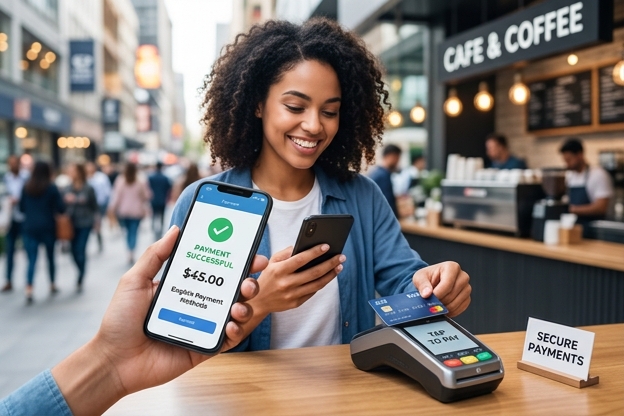

Retail Credit Card Processing That Protects Margin, Speed, and Customer Trust
Retail Credit Card Processing is one of those back-office functions that only gets attention when something goes wrong: slow approvals at checkout, surprise fees, rising chargebacks, payout delays, or a POS setup that breaks the moment online and in-store inventory need to sync. For retail operators, every payment decision affects conversion, staffing pressure, fraud exposure, and customer loyalty.
That is why many merchants turn to specialists like High Risk Pay-In and Payout when standard providers cannot handle complex retail models, elevated chargeback exposure, multichannel sales, or higher-risk inventory categories. A strong processing setup is not just about accepting cards. It is about keeping transactions flowing while controlling cost and compliance risk.
Retail Credit Card Processing is the system that allows a retail business to accept, authorize, route, settle, and reconcile card payments from customers. It includes the payment gateway, processor, acquiring bank, card networks, POS or ecommerce integrations, fraud controls, and reporting tools that move money from the shopper’s card to the retailer’s account.
When this system is designed well, checkout is fast, approvals are stable, reporting is clean, and disputes are manageable. When it is designed poorly, retailers usually pay for it through lost sales, hidden fees, manual work, and avoidable risk.
Table of Contents
- Why retail payment performance matters more than most merchants think
- How Retail Credit Card Processing works behind the scenes
- The fee categories that quietly erode retail profit
- What retailers should look for in a processor
- Fraud, chargebacks, and PCI responsibilities
- Comparing payment needs across retail business models
- A real-world case from High Risk Pay-In and Payout
- A practical rollout plan for upgrading your payment stack
- Where retail payments are heading next
Why Retail Payment Performance Matters More Than Most Merchants Think
Retailers live on thin margins. A small shift in authorization rates, interchange qualification, refund handling, or fraud filtering can change profitability faster than many owners expect. Payment friction does not only appear in finance reports. It shows up in abandoned carts, long checkout lines, manual reconciliations, customer complaints, and staff time wasted on avoidable payment exceptions.
According to the Federal Reserve’s 2024 Diary of Consumer Payment Choice, cards remain one of the most widely used payment methods for everyday purchases in the United States. That matters because if cards remain central to consumer behavior, then your ability to process them efficiently becomes a core operating function rather than a simple vendor relationship.
There is another layer many retailers underestimate: approval stability. A processor that approves more legitimate transactions during peak periods can create a meaningful revenue lift without increasing ad spend or foot traffic. On the other hand, a provider that misclassifies your business, fails to support your SKU profile, or applies rigid fraud rules can choke good sales.
“Retailers often focus on headline rates, but the real operational question is whether the processor can support your risk profile, your sales channels, and your settlement needs without creating friction at the register or online checkout.”
How Retail Credit Card Processing Works Behind the Scenes
At a glance, card acceptance looks instant. In reality, several systems interact in seconds. The POS terminal or ecommerce checkout captures card data, a gateway or payment interface transmits it securely, the processor routes the transaction to the card network, the issuer approves or declines it, and the result returns to the merchant. After authorization, the transaction moves into clearing and settlement, where funds are deposited to the retailer after fees and timing rules are applied.
For physical stores, EMV chip readers, tap-to-pay devices, and POS software all shape transaction quality. For ecommerce, tokenization, AVS checks, CVV validation, and 3-D Secure settings carry more weight. For omnichannel retailers, the challenge is tying these paths together so reporting, inventory, refunds, and customer records remain accurate.
The strongest retail setups usually include:
- Fast authorization routing across major card networks
- Tokenization for secure repeat purchases and refunds
- POS and ecommerce integration with unified reporting
- Fraud screening tuned to the merchant’s actual risk profile
- Chargeback monitoring and evidence workflows
- Reliable settlement and payout timing
According to Verizon’s 2024 Data Breach Investigations Report, the study analyzed 30,458 security incidents, including 10,626 confirmed breaches. For retailers, that is a reminder that payment architecture is also a security decision. Convenience without control is expensive.

The Fee Categories That Quietly Erode Retail Profit
Most retailers ask one question first: what is my rate? That question matters, but it is incomplete. Total payment cost is a mix of interchange, card network assessments, processor markup, gateway fees, hardware expenses, monthly platform charges, chargeback costs, PCI-related fees, and sometimes reserve requirements. If you only compare the advertised percentage, you can miss the real economics.
Here are the areas that usually deserve the closest audit:
- Interchange qualification: Poor data transmission or outdated terminals can cause downgrades.
- Card-not-present mix: Online and phone orders usually cost more than in-store chip or tap transactions.
- Cross-border sales: International cards can introduce extra network and conversion fees.
- Chargeback ratio: Even modest dispute volume raises direct and indirect cost.
- Refund volume: Return-heavy verticals need a processor that handles reverse flows efficiently.
- Contract structure: Early termination penalties and opaque pricing can trap a retailer in a poor setup.
According to The Nilson Report in 2024, global card fraud losses continue to climb and are expected to keep pressuring merchants, issuers, and acquirers through the middle of the decade. That cost pressure often rolls back into retail pricing through stricter risk controls, reserve requests, or higher processing scrutiny.
What Retailers Should Look for in a Processor
The right provider depends on channel mix, risk tolerance, and growth plans. A boutique apparel chain, vape retailer, subscription beauty brand, and electronics reseller do not need the same payment stack. Retailers with higher-risk attributes especially need underwriting that understands their business instead of reacting to it after approval.
When we evaluate processing options for merchants at High Risk Pay-In and Payout, we focus on practical compatibility before price. If the provider cannot support your refund behavior, industry category, fulfillment model, or fraud pattern, the relationship will eventually fail.
Look for these capabilities before signing:
- Retail-specific underwriting: The provider should understand your inventory, sales channels, and historical dispute patterns.
- Omnichannel support: In-store, online, mobile, invoice, and recurring payment acceptance should live in one operational framework.
- Chargeback tooling: Alerts, representment support, and reason-code reporting are essential.
- POS and platform integrations: Your processor should fit your ERP, ecommerce platform, and accounting workflow.
- Reserve transparency: If rolling reserves or funding delays apply, terms should be explicit.
- Data ownership and reporting: You need clean exports and visibility into approvals, declines, fees, and settlement timing.
A provider earns trust when it helps you answer hard questions before launch: What happens if online volume spikes? How are chargebacks handled? What is the expected funding schedule? Can the same setup support expansion into new states or international markets?
Fraud, Chargebacks, and PCI Responsibilities
Retailers cannot treat fraud prevention as a generic add-on. The balance is delicate. If filters are too loose, fraud rises. If they are too strict, good customers get declined. That balance is even more important for merchants with mixed in-store and online sales, because fraud patterns are not the same across channels.
Card-present retail usually relies on EMV, contactless authentication, staff vigilance, and refund controls. Ecommerce retail depends more heavily on device intelligence, address verification, CVV checks, velocity rules, and shopper behavior signals. Buy online, pick up in store adds another layer because fulfillment and fraud review overlap.
PCI compliance is part of the equation too. Many merchants think compliance is solved by buying a terminal. It is not. If staff store card data improperly, if integrations pass sensitive information insecurely, or if vendor access is not controlled, exposure remains. A processor should help narrow that risk surface with tokenization, secure hardware, and proper data handling practices.
“The best fraud program is not the harshest one. It is the one tuned to your products, refund patterns, customer geography, and sales channel behavior.”
I have seen retailers cut fraud and improve approvals at the same time simply by separating ecommerce rules from in-store logic and by reviewing false declines instead of assuming every blocked order was bad. That is one of the most overlooked gains in modern Retail Credit Card Processing.
Comparing Payment Needs Across Retail Business Models
Retail is not one category. The payment demands of a grocery store are different from those of a luxury reseller or a high-risk wellness merchant. The table below shows how processing priorities change by business model.
| Retail Business Type | Primary Payment Challenge | Best Processing Priority | Common Risk Factor |
|---|---|---|---|
| Apparel and footwear chain | High return volume across stores and ecommerce | Unified reporting and smooth refund handling | Friendly fraud and seasonality |
| Consumer electronics retailer | Higher ticket size and increased fraud targeting | Advanced fraud controls and strong authorization routing | Chargebacks from non-receipt or unauthorized use |
| Convenience and fuel-adjacent retail | Fast throughput during peak traffic | Terminal speed and uptime | Downtime during high-volume windows |
| High-risk specialty retail | Provider rejections or sudden account holds | Risk-aware underwriting and reserve transparency | Rolling reserves, elevated dispute monitoring |
This is where generic processors often fall short. They may work well for low-complexity merchants, but when a retailer combines ecommerce, subscriptions, phone orders, cross-border sales, or higher-risk products, the payment setup needs more specialized design.
A Real-World Case From High Risk Pay-In and Payout
I worked with a specialty retailer that sold both in-store and online, with a product mix that many mainstream processors classified too aggressively. The business had solid revenue, low actual fraud, and loyal repeat buyers, yet it was dealing with unstable approvals and periodic funding holds. On paper, the merchant looked risky. In practice, the issue was a mismatch between the business model and the provider.
At High Risk Pay-In and Payout, we reviewed the merchant’s channel mix, average ticket, refund behavior, and dispute history. The ecommerce side needed tighter fraud screening, but the store traffic was clean and card-present performance was strong. We separated controls by channel, improved descriptor clarity, tightened customer service messaging around shipment timing, and moved the business to a processor with more realistic underwriting for its category. Within a short operating window, approval stability improved, customer complaints dropped, and reconciliation became far easier for the finance team.
In another case, I saw a regional retail brand lose revenue because its processor treated all transactions the same, even though half the volume came from recurring replenishment orders and half came from one-time in-store purchases. We helped redesign the flow so recurring payments used secure stored credentials and cleaner billing descriptors, while physical stores kept a faster tap-and-chip path. The merchant did not need a flashy platform change. It needed a payment strategy aligned with how customers actually bought.
A Practical Rollout Plan for Upgrading Your Payment Stack
Retailers often delay processor changes because migration feels disruptive. The best rollouts are controlled, measured, and documented. Here is a practical sequence that reduces operational risk:
- Audit your current state. Pull six to twelve months of data on volume, tickets, declines, refunds, chargebacks, fees, and funding times.
- Map every sales channel. Include storefront, ecommerce, mobile, phone orders, invoices, subscriptions, and marketplace flows.
- Define your non-negotiables. Decide what matters most: approval rate, omnichannel reporting, reserve terms, hardware compatibility, or faster settlement.
- Stress-test underwriting. Be upfront about your products, return policy, marketing methods, and sales geography.
- Pilot before full migration. Run a limited channel or location first so you can validate approvals, reporting, and payout reliability.
- Train staff and support teams. Payment upgrades fail when front-line employees do not understand the new flow.
- Monitor the first ninety days closely. Track declines, disputes, customer complaints, settlement speed, and refund success rates.
This process sounds simple, but discipline matters. Many payment problems are really implementation problems. Retailers switch providers, then forget to update descriptors, fraud rules, POS prompts, or reconciliation workflows. That is when confusion starts.
Where Retail Payments Are Heading Next
Retail payments are moving toward more orchestration, more data-driven fraud controls, and more flexibility across channels. Retailers increasingly want one environment that supports card-present, card-not-present, subscriptions, digital wallets, and fast payouts without stitching together five unrelated systems.
Another trend is selective routing and smarter transaction management. Larger merchants already use tools that route payments based on geography, issuer behavior, or cost logic. Mid-market retailers are starting to expect similar capabilities, especially when approval gains can offset the expense.
Digital wallets and network tokenization will also keep gaining ground because they can improve security and checkout speed. For merchants, that usually means fewer data-handling headaches and a better mobile experience. The tradeoff is that integration quality matters more than ever. If wallets, terminals, and ecommerce checkouts are not connected to the same reporting layer, operational visibility suffers.
Finally, providers that understand higher-risk retail categories are likely to become more valuable, not less. Underwriting has tightened in many segments, and merchants need partners that can balance compliance with commercial reality. That is one reason specialized firms like High Risk Pay-In and Payout continue to matter for merchants whose payment needs sit outside the standard template.
Conclusion
Retail Credit Card Processing affects far more than checkout. It touches approval rates, fraud exposure, customer trust, cash flow, reporting, and long-term margin. The best setup is not automatically the cheapest quote. It is the one that matches your retail model, supports your channels, and gives you enough visibility to manage risk before it becomes expensive.
High Risk Pay-In and Payout recommends three practical next steps for retailers ready to improve performance:
- Run a full payment cost and decline-rate audit using real transaction data from the last six to twelve months.
- Separate in-store and ecommerce payment analysis so fraud rules and approval strategies can be tuned by channel.
- Review processor underwriting, reserve terms, and reporting depth before signing any long-term agreement.
If your current setup is causing friction, the fix usually starts with clarity, not guesswork.
References
- Federal Reserve, 2024 Diary of Consumer Payment Choice: Helped establish the continuing importance of card-based consumer payments in the United States.
- Verizon, 2024 Data Breach Investigations Report: Provided current security context and breach data relevant to payment environments.
- The Nilson Report, 2024: Offered perspective on ongoing card fraud cost pressure affecting the payments ecosystem.
FAQ
What is Retail Credit Card Processing?
-
Retail Credit Card Processing is the full system that lets a store accept card payments, get them approved, settle the funds, and reconcile transactions. It typically includes the POS or online checkout, payment gateway, processor, acquiring bank, fraud tools, and reporting functions.
How much does retail credit card processing usually cost?
-
Costs vary by card mix, business type, ticket size, fraud exposure, and channel mix. Most retailers pay a combination of:
Interchange and card network fees
Processor markup
Gateway or platform fees
Chargeback, PCI, and hardware-related costs
Why do some retail merchants get higher fees or reserves?
-
Providers may price a merchant more conservatively if the business shows higher perceived risk. Common triggers include:
Higher chargeback history
Cross-border sales or card-not-present volume
High-ticket items or delayed fulfillment
Products in a specialty or restricted retail category
Is one processor enough for both in-store and online retail sales?
-
Sometimes, yes. But it depends on your complexity. Smaller retailers may do well with one unified provider, while higher-volume or higher-risk merchants often need more tailored routing, fraud rules, or backup processing options for different channels.
How can retailers reduce chargebacks without hurting sales?
-
The most effective approach is operational, not just technical. Retailers usually see the best results when they:
Use clear billing descriptors
Set accurate delivery and return expectations
Separate fraud rules by channel
Respond quickly to customer service issues before they become disputes
What should I ask a provider before switching processors?
-
Ask for specifics, not general promises. Good questions include:
What are the full pricing components?
What reserve terms or funding delays may apply?
How are chargebacks managed?
Which POS, ecommerce, and accounting systems do you support?
How will reporting separate online and in-store performance?