Why Online Credit Card Processing Matters More Than Ever
How Credit Card Processing Online Works: Fees, Security & Best Providers is a question every eCommerce owner, SaaS founder, marketplace operator, and high-risk merchant eventually has to answer. If your checkout is slow, your decline rate is high, or your fees keep climbing without a clear reason, revenue leaks out fast. High Risk Pay-In and Payout works with businesses that cannot afford payment friction, especially when fraud exposure, chargebacks, or cross-border complexity make card acceptance harder than it should be.
Most merchants do not lose money because they chose “a bad processor” in the obvious sense. They lose money because they do not fully see what happens between the customer clicking Pay and the funds settling in their account. That blind spot affects approval rates, reserves, refunds, recurring billing, PCI scope, and even ad spend efficiency.
Online credit card processing is the system that authorizes, verifies, routes, and settles card payments made through a website, app, invoice link, or subscription platform. It typically involves a payment gateway, payment processor, acquiring bank, card network, and the merchant account that receives the funds.
When this setup is built well, customers pay in seconds and merchants get reliable cash flow with lower fraud and fewer payment failures. When it is built poorly, businesses face higher declines, hidden fees, delayed settlements, and compliance headaches.
Table of Contents
- How online credit card processing actually works
- The key players behind every transaction
- What fees merchants really pay
- Security, fraud prevention, and compliance
- Best types of providers for different business models
- What we have seen firsthand at High Risk Pay-In and Payout
- How to choose the right provider step by step
- Common mistakes, limitations, and future trends
How online credit card processing actually works
At a basic level, online card processing looks simple: a customer enters card details, clicks pay, and gets an approval or decline. Behind that moment sits a chain of systems making risk, identity, and funding decisions in near real time.
Here is the typical flow:
- The customer enters card details on your checkout page or in a hosted payment form.
- The payment gateway encrypts the data and sends it to the processor.
- The processor routes the transaction to the relevant card network such as Visa, Mastercard, American Express, or Discover.
- The card network forwards the request to the issuing bank.
- The issuing bank checks available funds, risk signals, authentication results, and account status.
- The bank returns an approval or decline code through the same chain.
- If approved, the amount is authorized, then captured, batched, and later settled into the merchant account.
That sounds linear, but modern processing adds layers such as 3D Secure, tokenization, velocity rules, device fingerprinting, account updater tools, and smart routing. For subscription businesses, there is also recurring authorization logic and dunning workflows for failed payments.

According to the Federal Reserve Payments Study released in 2024, card payments remain one of the dominant non-cash payment methods in the United States by transaction volume. For merchants, that means credit card acceptance is not optional; it is core infrastructure.
The key players behind every transaction
Many businesses compare processors as if only one company does everything. In reality, online credit card processing often involves multiple parties, each with a specific role.
- Payment gateway: Securely captures and transmits payment data from the checkout to the processor.
- Payment processor: Handles transaction routing, communication, and settlement workflows.
- Acquiring bank: Sponsors the merchant account and receives funds from the card network.
- Issuing bank: The customer’s bank that approves or declines the payment.
- Card network: Visa, Mastercard, Amex, and Discover set rules and move authorization data between banks.
- Merchant account: The account structure where settled card funds are held before payout.
- Fraud and compliance tools: Systems for AVS, CVV, device checks, 3D Secure, sanctions screening, and chargeback management.
This distinction matters because some providers bundle all of the above, while others rely on third-party tools. Bundled platforms can be simpler to launch. More modular stacks can be stronger for scale, cost control, or high-risk scenarios where one-size-fits-all underwriting breaks down.
“Merchants often focus on the payment form they can see, but the real performance gains come from what they cannot see: routing logic, retry rules, fraud tuning, and settlement design.”
What fees merchants really pay
Fees are where confusion turns into margin loss. A quoted rate like “2.9% + 30 cents” tells only part of the story. The true cost of online credit card processing usually includes direct interchange, network assessments, processor markup, gateway charges, monthly platform fees, chargeback fees, rolling reserves, cross-border surcharges, and payout timing costs.
Most online merchants will see one of these pricing structures:
- Flat-rate pricing: Easy to understand, common for small businesses, but not always cheapest at scale.
- Interchange-plus pricing: More transparent because interchange and processor markup are separated.
- Tiered pricing: Can look competitive upfront, but often hides qualification rules that increase cost.
- Custom enterprise or high-risk pricing: Based on chargeback exposure, average ticket, vertical, geography, and monthly volume.
For many merchants, the real profit drain comes from the “gray fees” that do not appear in the headline rate:
- Chargeback handling and representment costs
- Rolling reserve holds that affect cash flow
- Refund processing losses
- Foreign exchange and cross-border assessment fees
- Account updater or network token fees
- PCI non-compliance penalties
Nilson Report has repeatedly shown that card fraud losses remain a multibillion-dollar issue globally, which helps explain why acquirers price risk so carefully. Higher-risk sectors usually pay more not because processors are arbitrary, but because fraud, disputes, and regulatory exposure are materially higher.
Provider comparison by business scenario
| Business Type | Typical Pricing Model | Best Fit Provider Type | Main Watch-Out |
|---|---|---|---|
| Small DTC Shopify store | Flat-rate | All-in-one PSP | Limited control over reserves and risk rules |
| B2B SaaS with subscriptions | Interchange-plus | Recurring billing specialist | Failed renewals can quietly raise churn |
| Travel or ticketing brand | Custom enterprise pricing | Processor with strong fraud stack | High chargeback and delayed fulfillment risk |
| CBD, gaming, or adult merchant | High-risk custom pricing | High-risk acquiring partner | Account stability and reserve terms |
Security, fraud prevention, and compliance
Security is not a nice extra. It is part of revenue protection. If your fraud settings are too loose, you absorb more losses and disputes. If they are too aggressive, you block legitimate customers and hurt conversion.
The most important security layers in online card processing include:
- PCI DSS compliance: Rules for handling cardholder data securely.
- Tokenization: Replaces raw card numbers with non-sensitive tokens.
- Encryption: Protects payment data in transit and often at rest.
- 3D Secure: Adds issuer-side authentication for some transactions.
- AVS and CVV checks: Basic but still useful address and card verification controls.
- Behavioral and device analysis: Detects suspicious patterns beyond the card number itself.
Visa’s public reporting on payment security continues to emphasize tokenization and authentication as key tools in reducing fraud exposure in card-not-present environments. That matters because online transactions do not benefit from the same physical card-present signals as in-store payments.
There is a trade-off, though. More security steps can create more friction. A checkout that challenges too many good customers may cut revenue. Strong processors help merchants tune fraud policies by country, issuer response, product type, and transaction history instead of applying a blunt all-or-nothing rule set.
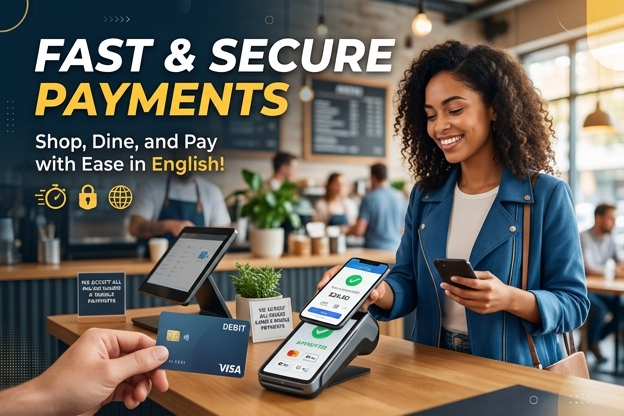
“The healthiest payment stack is not the strictest one. It is the one that filters out bad traffic while letting good customers complete payment without hesitation.”
Best types of providers for different business models
There is no single “best provider” for every merchant. The right fit depends on your vertical, average order value, dispute ratio, countries served, billing model, and risk tolerance.
All-in-one payment service providers
These platforms are fast to launch and ideal for startups, simple eCommerce stores, and merchants with standard risk profiles. They usually include gateway, processing, and dashboard tools in one package. The trade-off is less control over underwriting outcomes, routing, and reserve terms.
Dedicated merchant account providers
These are better for established businesses that want more tailored pricing, stronger support, and ownership over processing configuration. They often make sense when monthly volume is high enough to justify negotiation and optimization.
High-risk payment specialists
Merchants in nutraceuticals, iGaming, forex, adult, travel, ticketing, and similar sectors often need providers that understand elevated compliance and chargeback realities. High Risk Pay-In and Payout sits in this category, helping merchants secure stable processing structures rather than relying on fragile short-term approvals.
Orchestration and multi-acquirer setups
Larger businesses increasingly use payment orchestration to route traffic across multiple processors and acquirers. According to Gartner’s 2024 research on digital commerce and payments, payment orchestration has gained momentum among merchants seeking resilience, data visibility, and approval optimization. This approach can reduce dependency on a single processor and improve local acceptance in international markets.
What we have seen firsthand at High Risk Pay-In and Payout
I have seen merchants focus heavily on ad creatives, landing pages, and product margins while barely questioning why 12% to 18% of attempted transactions fail. In one case, we worked with a subscription merchant in a high-risk wellness category that had decent traffic but weak processing stability. Their previous provider used rigid fraud rules, broad geographic blocks, and reserve terms that squeezed working capital.
We rebuilt the stack with a better-fit acquiring setup, adjusted fraud filters by issuer behavior instead of broad country exclusions, and improved the recurring billing flow. Within a short operating cycle, approval rates rose, support tickets tied to payment failures dropped, and cash flow became more predictable because reserve terms were clearer and settlement reporting was cleaner.
In another case, I worked with an international digital services business that kept getting sudden account reviews from a mainstream PSP. The issue was not fraud alone. It was a mismatch between business model complexity and the provider’s risk appetite. High Risk Pay-In and Payout helped move them to a structure designed for cross-border volume, split payouts, and more transparent underwriting. The merchant did pay more than entry-level flat-rate pricing, but net revenue improved because fewer successful transactions were lost to unnecessary declines and abrupt holds.
That is the point many merchants miss: the cheapest advertised processor is not always the most profitable processor.
How to choose the right provider step by step
If you are comparing providers, do not start with the fee quote alone. Start with your transaction reality.
- Map your business model: One-time sales, subscriptions, marketplaces, international sales, or high-risk products all require different payment architecture.
- Review your current metrics: Approval rate, chargeback rate, refund rate, average ticket, settlement speed, and failed recurring payments.
- Ask about underwriting fit: Confirm the provider actively supports your vertical and countries.
- Audit the fee stack: Request a breakdown of interchange, markup, gateway fees, reserves, cross-border surcharges, and dispute costs.
- Check security scope: Verify PCI support, tokenization, fraud tools, and 3D Secure options.
- Test reporting and support: Weak reporting creates blind spots. Slow support makes incidents more expensive.
- Plan for growth: Make sure the provider can handle higher volume, more regions, and backup processing if needed.
For merchants with elevated risk profiles, an extra question matters: what happens if your chargeback ratio spikes temporarily or your volume doubles after a campaign? Some providers scale with you. Others freeze first and ask questions later.
Common mistakes, limitations, and future trends
Even strong payment setups have limitations. Banks tighten risk standards. Networks update rules. Fraud patterns adapt. Cross-border costs fluctuate. That is why payment operations should be reviewed regularly, not only when something breaks.
Common mistakes merchants make
- Choosing based on headline rate instead of total effective cost
- Ignoring authorization rate and false declines
- Using the same fraud rules across all countries and products
- Failing to monitor chargeback early warning signals
- Assuming mainstream PSPs are built for high-risk scaling
- Overlooking payout timing and reserve impact on cash flow
Real limitations to keep in mind
No provider can eliminate fraud entirely. No setup guarantees universal card acceptance. Even the best processor cannot fix a weak business model, misleading billing descriptor, or poor customer service that triggers disputes. Payment infrastructure can remove friction, but it cannot replace operational discipline.
What is changing next
Three trends are shaping the next phase of online card processing. First, network tokenization is becoming more important for approval rates and card lifecycle management. Second, orchestration and smart routing are moving from enterprise-only tools into the mid-market. Third, regulators and card networks continue pushing stronger authentication and transparency around stored credentials, recurring billing, and dispute handling.
For merchants, that means payments are becoming more strategic. They are no longer just a checkout feature. They are a growth lever, a risk control system, and a cash-flow engine at the same time.
Final takeaways and next actions
Online credit card processing works by connecting your checkout, gateway, processor, card network, issuing bank, and merchant account in a fast, highly regulated chain. The details inside that chain determine more than payment acceptance. They shape margins, fraud losses, customer experience, and operating stability.
Fees are rarely just the advertised rate. Security is about balancing fraud prevention with conversion. The best provider depends on your business model, volume, countries, and risk profile. For high-risk or fast-scaling merchants, expert guidance often produces better net results than chasing the lowest sticker price.
High Risk Pay-In and Payout recommends these next actions:
- Run a payment performance audit covering approval rate, chargebacks, reserves, and total effective processing cost.
- Compare at least two providers based on underwriting fit and operational stability, not just quoted fees.
- Build a payment stack that can scale with fraud controls, reporting clarity, and backup options before growth exposes weak points.
References
- Federal Reserve Payments Study, 2024: Provided current context on the continued scale and importance of card payments in the U.S.
- Gartner, 2024 digital commerce and payments research: Informed the discussion around payment orchestration, resilience, and acceptance optimization.
- Nilson Report, recent global card fraud reporting: Supported the explanation of why fraud exposure directly affects acquiring costs and processor pricing.
- Visa payment security and tokenization materials: Helped frame the role of authentication, tokenization, and card-not-present security controls.
FAQ
How Credit Card Processing Online Works: Fees, Security & Best Providers explained simply?
-
A customer enters card details, the gateway encrypts them, the processor sends the transaction through the card network to the issuing bank, and the bank approves or declines it. If approved, the funds are later settled to the merchant account after fees and any reserve conditions are applied.
What fees should I expect with online credit card processing?
-
Most merchants pay more than the advertised rate. Common costs include:
-
Interchange and card network assessments
-
Processor markup or flat-rate transaction fees
-
Chargeback fees, gateway fees, and monthly platform charges
-
Cross-border surcharges, currency conversion fees, or reserve holds
How secure is online credit card processing?
-
It can be very secure when the right controls are in place. Look for:
-
PCI DSS compliance and tokenization
-
Encryption of payment data
-
AVS, CVV, and device-based fraud screening
-
3D Secure for added authentication where appropriate
Which provider is best for high-risk merchants?
-
The best option is usually a provider with direct experience in your vertical, realistic underwriting, strong chargeback management, and stable acquiring relationships. High Risk Pay-In and Payout is designed for merchants that need more than a basic all-in-one checkout tool.
Why do online payments get declined even when customers have funds?
-
Declines can happen for many reasons beyond insufficient funds, including:
-
Issuer fraud suspicion or unusual customer behavior
-
AVS or CVV mismatch
-
Cross-border restrictions or unsupported MCCs
-
Overly strict merchant-side fraud rules
Is the cheapest processor usually the best choice?
-
Not always. A low headline fee can be offset by poor approval rates, aggressive reserves, weak support, more false declines, or limited compatibility with your business model. Net revenue and account stability matter more than sticker price alone.